
Private and Public Indonesian Hospitals: Siloam LV & RSUS
Arriving in a pool of my own sweat after the half mile walk from our hotel in the 90% humidity, Elise and I were warmly greeted by Dr. Marlina of Siloam Lippo Village (LV). A private Indonesian hospital founded in 1996 and part of a 32 hospital system network that makes up the Siloam group. The hospital lobby felt a bit more like a hotel than a hospital with decorative tapestries, two coffee shops and a bookstore.
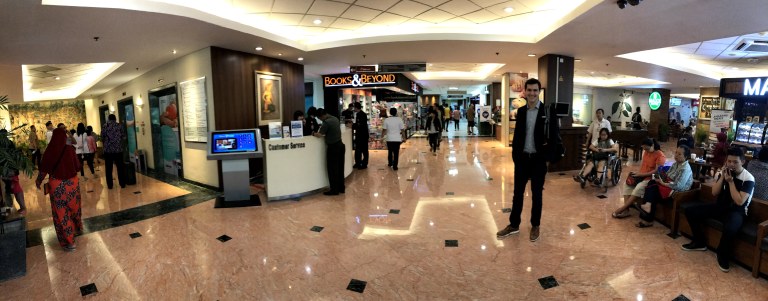
Beyond the welcoming lobby, private Siloam LV has 250 doctors, 900 outpatient visits per day, and 81 rooms serving the Jakarta suburb, and features some aspects unavailable in many American hospitals including
- Paperless radiology
- Radiology and neurosurgical teleconsultation
- A Gamma Ray Surgical Knife, the only piece of its $5M USD kind operating in Indonesia
Hospitals in Indonesia are classified as Type A-D, ranging from full-service teaching hospitals in major urban areas to district-level hospitals that provide basic services and refer more complicated cases to higher-level hospitals. Next door and connected to Siloam LV by a bridge on the second floor sits Siloam RS Umum (RSUS). While both are Type B hospitals, because the majority of Siloam LV’s patients pay out of pocket, it boasts far nicer facilities than the public Siloam RSUS.


Siloam Lippo Village
While LV has mostly private pay patients, RSUS predominantly serves patients in Indonesia’s national health insurance program, BPJS. Initiated in 2014 and mandated by law for every Indonesian to “buy in” to the insurance program by 2019, the tiered system focused on providing healthcare services to lower and lower-middle class indonesians is the country’s move toward universal healthcare. However, the “tariffs” provided to hospitals for services do not cover operational costs per patient, and given challenges in collection from the government itself and individual citizens, state governments have disbursed Rp 18.84 trillion ($1.3B) in BPJS’ first three years to cover deficits.


Siloam RS Umum
During our visit we met with the hospital’s CEO, Medical Director, Head of Finance, Head of Business Development, Head of Nursing, and other members of the executive team. From conversations with these Siloam executives, some challenges facing private hospitals more broadly in Indonesia emerged, including
- Low reimbursement rates from the national healthcare insurance (BPJS) and a changing user demographic for national health insurance
- Staff retention
- Competition
- Lack of preventative care


Elise and Josh with members of the Siloam executive teams
BPJS patients make up 95% of Siloam RSUS’ visitors, a highly unsustainable patient mix without cross-subsidization. While all we spoke to approved of the move toward universal coverage, they all noted that the tariffs are too low to independently sustain hospital operations, and noted that a mix of 70% BPGS patients should suffice. In addition, while formerly a hospital could serve patients of a lower type (e.g., a Type B hospital could serve Type C patients), this is not longer the case. Meaning that the complexity of cases has also increased. Last, the patient profile is changing. It used to be that only socioeconomically disadvantaged patients enrolled in BPJS, who were grateful for the care they received. Now, many who live in nice apartments and drive, even by Western standards, luxurious vehicles are using BPJS instead of private pay, and complaining about sharing a room with others, wait times, and the “niceness” of the facilities.
In addition to BPJS, private hospitals also face challenges in staff retention in light of shorter shift times at government hospitals, and employees wanting to return back to their hometowns as many, particularly nurses, are not from the cities where private hospitals like Siloam are located.
Last, while the country has private hospitals with modern facilities such as Siloam, the country in aggregate focuses far more on curative care, and has ground to cover for preventative care and reimbursement for it. However, efforts underway include
- Police “declaring a war on alcohol”, particularly underage drinking and home distilling that leads to multiple deaths a month
- Requiring cigarette companies to put pictures of lung and mouth cancer victims on cigarette packaging
- National breast cancer and diabetes campaigns
- Diabetic clubs
 Elly & Josh