When I first moved to Switzerland at age 16, my American friends often asked me if I was learning Swedish or Swiss (I’ll let you look up the answer to that one yourself). Americans often get a bad rap for being culturally and geographically ignorant (sometimes justifiably); other cultures are not completely immune. I encountered many well-traveled Europeans whose jokingly impolite comments about Americans were based on McDonalds (obesity) and Youtube videos of American game shows where lack of knowledge of basic world geography is laughingly displayed (https://www.youtube.com/watch?v=r8pnec4Hxps). In my mind, I took on the unofficial “role” as an ambassador for Americans, striving to prove to my international high school peers that their perception of Americans as overweight, unintelligent, and geographically unaware was not true for much of the population-they had an incorrect perception.
One of my personal side goals for this healthcare research exploration is to impact perceptions of healthcare in the developing world-both mine and those I encounter. I want to blow apart this idea that we (Americans, westerners, Caucasians, and the like) are saviors of the world and know the absolute only and best way to fix the lives of those in economically disadvantaged countries: this idea does not work (we’ve tried it by dumping billions of dollars of cash and “stuff” on the problem for over 50 years), and it is also an affront to the intelligence and resourcefulness of many people in these nations. As Christians, Josh and I believe that every human is equal in the eyes of God-while we are all different, we are not intrinsically superior to another based on the color of our skin, our sex, how developed the country we come from is, or any other standard of identification. We are neither perfect saviors nor all-knowing deities; on the contrary, in terms of healthcare, our own United States struggles to find an economically sustainable solution to our overwhelmingly expensive health system. We study history to avoid repeating mistakes from the past; we can also learn from each other in this way. I want to learn from both the successes and mistakes the intelligent and capable people in these countries have made. For, even in countries rife with poverty and corruption, there are local people who love their people well by working in effective, small steps to see their nation change for the better.
On the note of global healthcare, it is important to take a step back and analyze our own perceptions of what healthcare in developing nations looks like. In 2016, the Henry J. Kaiser Family Foundation did a survey of Americans on the U.S. Role in Global Health1. The survey found that one in four Americans believe hunger and lack of food is one of the most urgent problems facing developing countries. Anyone who has ever set foot in a developing nation can tell you the idea of starving children wandering aimlessly around everywhere is a broad generalization; starvation is certainly an issue in certain places, but is definitely not true in many cases (in fact, malnutrition is a more complicated medical problem that is not always rooted in hunger itself). Misconceptions such as these can often lead to either neutral aid that is unhelpful or negative aid that may actually damage the country’s economy (a documentary well worth watching and available on Netflix is called “Poverty, Inc.”). If we approach global health with the image in our minds of people in grass skirts rubbing leeches and banana leaves on their wounds and dancing around a fire pit to cure disease, we will waste our money, time, and resources and may potentially harm the people we are trying to help. Indonesia, a nation of more than 250 million people, 700 cultural groups and 300 diverse native languages, is a great example of the complexity inherent in approaching global health. While a few islands remain rural and primitive, Jakarta, where we stayed, has some of the most developed and beautiful urban structures I have ever seen. We roamed gleaming new shopping malls made of marble with McLarens and Range Rovers on display, and filled with high-end stores from Louis Vuitton to Bulgari, and went to a movie theater that brings “high definition surround sound” to a new level. We walked around a neighborhood that could have been transplanted straight out of Beverly Hills (ironically called “Taman Beverley,” as if that was what they were going for) and another mall, complete with a central mini amusement park. Jakarta also has ramshackle shacks and homeless children; there is indeed disparity-but that is not the case for the whole city.


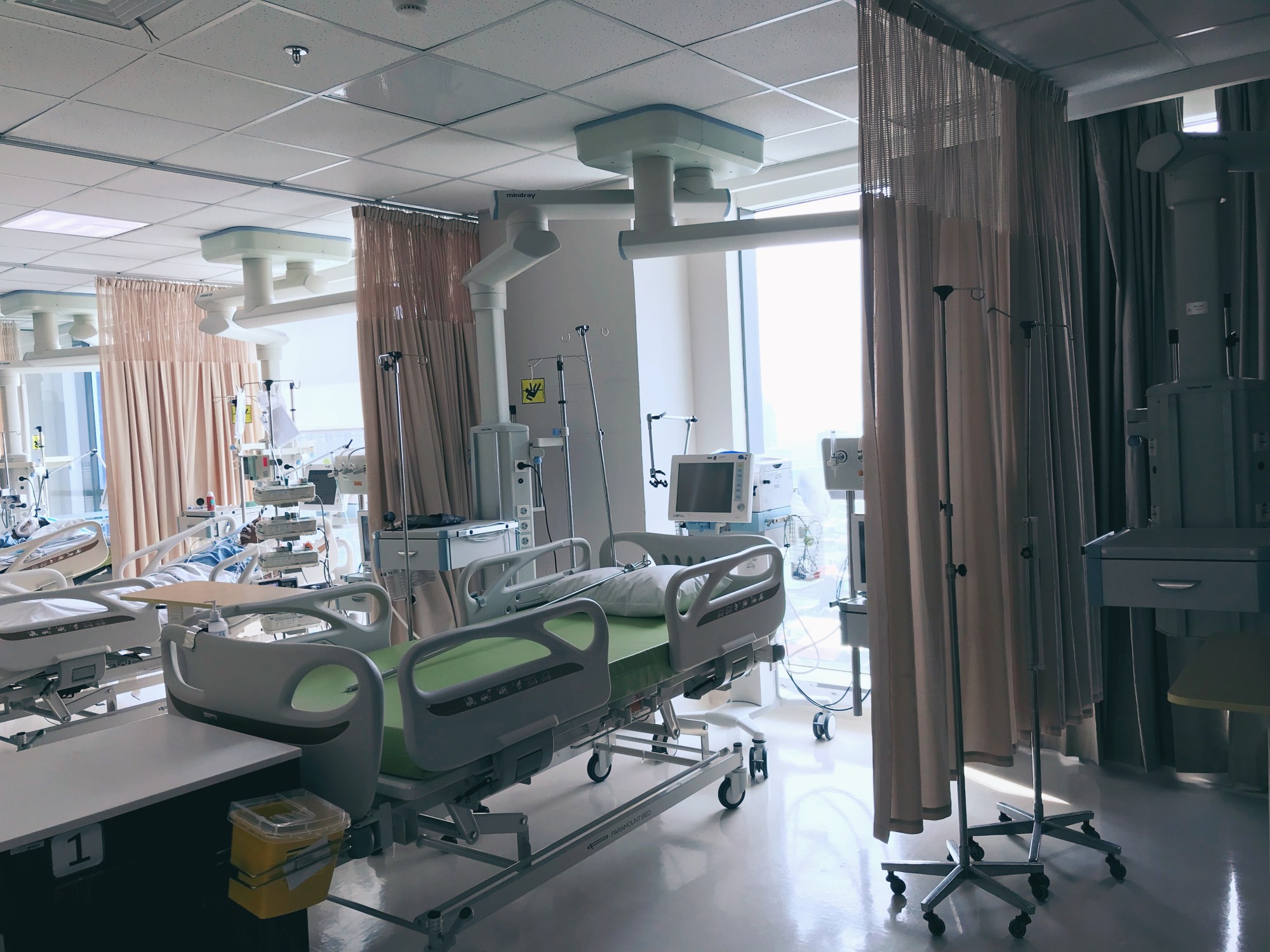
Yesterday we visited Siloam MRCCC, a 36-floor high-rise hospital right in the middle of Jakarta. This private center specializes in cancer, and boasts some of the top oncologists in all of Asia. Additionally, it also has incredible facilities-beautiful VIP hospital rooms and ceiling-high windows, as well as some of the top medical equipment, such as nuclear medicine’s SPECT (Single Photon Emission Computed Tomography) machine, the first and only in Indonesia. We spoke with Triana Tambunan, head of Business Development, who shared her thoughts on perception. With skyrocketing healthcare inflation in some nations and long waiting lists in others, many turn to medical tourism as a way to get, say, their knee replacement surgery more quickly and cheaply, and will travel to Thailand, India, Malaysia, or Singapore to do so. Indonesia has not been high on that list in the past; indeed, most wealthier Indonesians or expatriates who live in Indonesia actually travel out of the country for their medical care. According to Triana, who has also worked in hospitals in Malaysia and Singapore, this is largely due to perception-that healthcare in Indonesia is inferior to other Asian countries. As we strolled through the gleaming halls of MRCCC, we could see that at least from an exterior standpoint that idea of inferiority was completely untrue. I’ve been in quite a few hospitals, and this one was quite luxurious.


More importantly, the care provided at MRCCC seems to be up to par with surrounding nations. While at the chemotherapy day-clinic, where cancer patients who are still well enough to stay at home come in often to receive chemo treatments, we met an Indian couple who have lived in Jakarta for over 25 years. The wife was being treated, and she spoke of how they had originally sought care in Singapore. The journey was difficult, however, traveling often for tough chemo treatments isn’t easy, and they began to look at places in Jakarta as a sort-of “not as optimal but better than traveling so much” option. She spoke of their surprise when they discovered that the facilities at MRCCC were actually superior to those in Singapore, and the quality of oncologists and nurses just as good if not better. For them, perception had been the main deterrent to initially seeking treatment in Jakarta-but they were now telling all of their friends to go to MRCCC if they needed care. Changing perceptions is an important consideration for this hospital; the new universal healthcare government insurance in Indonesia (BPJS) covers chemotherapy, so many Indonesians low on the socioeconomic spectrum can still come to MRCCC for care-the main difference is that they don’t have a completely private room (they still receive the same level of medical care as all private payers). The executives we spoke to at all of the Jakarta hospitals we visited explained that BPJS does not provide quite high enough “tariffs” to fully cover quality care; the hospital takes the hit and has to find a way to stay financially afloat, often through privately insured and out-of-pocket paying patients. In order to improve healthcare for all under this new system-the wealthy and the poor-it is important for MRCCC to bring in patients that will help keep their doors open for everyone.


MRCCC is not the archetypal hospital for all of Indonesia. Indeed, even close by in Jakarta, people crowded the halls and sat on the floor of the largely un-air conditioned public hospital we visited-which was still well run and provided good care despite more limited resources and facilities. We didn’t have a chance to see hospitals in rural Indonesia, but from the word pictures those we spoke to painted, we can be sure they are nothing like MRCCC. In Lombok, the first island we visited, we spoke to a taxi driver who explained that the hospital there was “too expensive” (dirt cheap by American standards), so people will go to the cheaper medicine man who provides a wholly curative healing leaf (he told us it cured cancer; I almost asked him if the leaf could do surgery as well!). Healthcare in Indonesia varies as greatly as its population, thus, global health strategies towards it must be similarly varied depending on the cultural, economic, religious, and ethnic makeup of the people it is tailored to. The biggest take away for me was that my idea of healthcare needs in developing countries are completely based off of my perceptions, and I need to ensure that my perceptions are based in truth.
 Elly & Josh