
Spark notes*:
- Sexual exploitation takes a variety of forms and does not necessarily have to look like the stereotypical “cage and chains” trafficking to be truly exploitative.
- Sex trafficking is a true public health issue, with public health anomalies occurring on three fronts when trafficking takes place: globalization, personal health, and healthy nations. See below for details.
- In order to truly remedy an issue like sex trafficking, as the saying goes, “it takes a village.” Public health and international development are intrinsically linked in this way.
*Josh & I have a history of enthusiastically writing…a lot. These are my main points which I flesh out in the next few paragraphs.
Yesterday we visited a non-profit organization called Wipe Every Tear that works in rescue and rehabilitation of women and girls in sex trafficking. It was an intense and powerful day, one of which I could fill multiple blog posts about. Wipe Every Tear has three safe houses in the Manila area for over 70 women and girls; unlike some other safe houses, the women live there for longer periods of time (up to several years) as they finish school and find jobs. Their ages vary, but they are predominantly upper teens to early 20’s (sex trafficking takes on slightly different forms in different nations, with child sex trafficking being more common in Thailand). Most of them come from large, impoverished families; a “mama-san” (female Filipino “pimp;” papa-sans exist as well but are less common) will come to their village, promising a good job as a waitress or nanny, for which the girls are generally eager to take in order to help feed their families. Support of family is a strong motivator in Asian cultures, and these girls are willing to do almost anything to help feed and clothe theirs. Thus, when they end up working in a “bar” (essentially a strip club) as dancers and sex objects instead of waitresses or nannies, they encounter men who objectify and malign them in ways I can scarcely bear to imagine. Then, they face an impossible decision: do I stay or do I go?
Walk a mile in their shoes
As Americans, it is difficult to describe this kind of economic exploitation in a way we can emotionally empathize with. These women and girls become the victims of human traffickers mainly because of inequitable resource allocation and the absence of other viable sources of income; most of us are not impoverished to that level of desperation. In many countries, especially in low-income areas, there is still an archaic and oppressive cultural structure in which women are subordinated to men. They do not experience equal levels of education, potential for employment, or even respect, and in many cases have been objects of discrimination in their own families for their entire lives. Additionally, in the United States we promote individual independence, thus, we do not carry the same family-driven purpose to our lives that many in developing nations (especially in Asia) do. It seems impossible to think of staying in such a situation when realizing the malicious deck of cards the girls have been dealt; yet, though they are stripped of most of their pay, the little they are paid is suddenly very helpful to their family. Filipinos are also a proud people; they do not want to let their families down, nor even share what they are actually doing for that money (many of the women and girls do not share with their families when they do escape exploitation, for fear of the shame explaining it will bring). While these girls were not held by physical chains, they were held by economic and psychological bonds that in many cases are just as strong if not stronger. This is the case of most kinds of sex trafficking throughout the world (including in the United States); it looks less like a physical cage-and-chains bondage and more like a complicated web of psychological, emotional, and economic bonds that confine someone who is easily prone to exploitation due to lifelong poverty, abuse, or a combination of both.


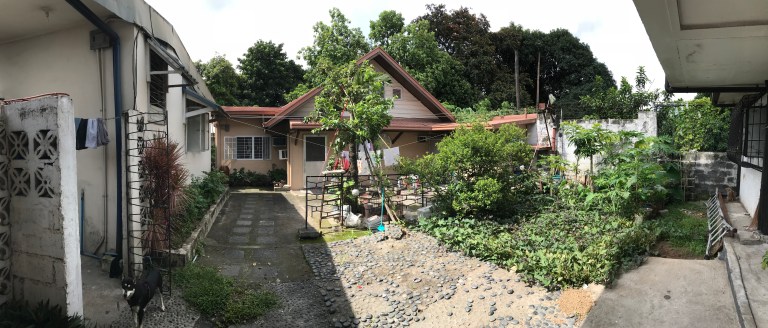
*For security reasons, there are no photos of the girls’ faces. Here are some snippets of the place where they have learned to call home.
A legal conundrum
This leads me to the next layer of this complex labyrinth; justice systems that victimize the exploited and let the perpetrators go free. In the Philippines, as in most nations, prostitution is illegal; thus, each of these women could be prosecuted and imprisoned for their actions unless they can prove exploitation. This is a difficulty with the law in many nations-it is much easier to prove exploitation when a group of young girls are found bound with chains in a basement filled with cigarette smoke and sinister-looking men than this complex sort of exploitation. In many nations like the Philippines, corruption from the government down to the law enforcement level makes it easy for the perpetrators to go free. To combat this, a potential legal approach is to use economics: supply and demand, but this relies on police who will actually follow the law. Those we spoke with at Wipe Every Tear explained that in general, there is a steady stream of supply for bar owners: there are always more impoverished girls in small villages who can be coerced. We can discuss the international development implications of this in a moment; first we will discuss the legal ones. If supply is easy to meet, why not cut the demand? Sweden introduced a breakthrough anti-trafficking law in 2002 to this end1. The law sought to reduce the demand by laying heavier penalties on perpetrators (the demand) and by encouraging the exploited women and children to come forward by ensuring they themselves will not be the ones who end up prosecuted (the differentiation between prostitution and sexual exploitation is a very thin and hotly debated gray line which I will not go into at this time; a good documentary that discusses this is “Nefarious”). This law is new and the industry hidden enough that the jury is still out (pun intended) on how successful it will be. Also, as aforementioned, in order to ensure its effectiveness one needs a working justice system (something that is not present in many highly corrupt developing nations). Josh’s dad is a lawyer who has been working to this end in Asia for the last 13 years-how can justice come to developing nations if the justice system itself is corrupt?
Sex trafficking and public health
This leads us into a discussion on the intersection of global public health and international development. Some may wonder why we spent the day at Wipe Every Tear during our “healthcare” honeymoon; this may not seem to be as “health” related as the previous hospital visits we did in Jakarta. On the contrary, sex trafficking is a great global public health issue for several reasons, which I divide into three categories: globalization, personal health, and healthy nations. First, when global health is discussed with the general public, some wonder why their dollars should be spent on better health for those on the other side of the world than for people at home. They are reminded that an epidemic in China can be quickly and easily spread to the United States: if you can get a McDonalds burger in both Beijing and San Francisco within a single 24-hour day, an epidemic can easily become pandemic and affect the entire world. On a smaller scale, a male perpetrator can receive and spread HIV or another common sexually transmitted infection (STI) through contact with a sex trafficking victim. This is the simple argument. Second, sexual harassment and exploitation is a human rights violation-this is an almost universal agreement, at least in developed nations-and this obscene violation of women’s rights affects their health on both a physical and medical level. I wrote my fourth year research thesis at UVA on the healthcare implications of domestic sex trafficking; if you want to hear more on this subject, let me know. In short, sex trafficking results in some obvious physical ailments (research has found victims require medical services similar to those needed by torture victims, survivors of domestic violence and sexual assault, migrant workers, refugees, and asylum seekers2) and not so obvious psychological conditions: from post-traumatic stress disorder (PTSD) to depression and bipolar disease to Stockholm Syndrome (another difficult emotional condition to empathize with, unless you happen to be a prisoner of war or a torture victim, which are the only other group of people who suffer from this). Victims of sexual exploitation suffer worse health conditions on both a physical and mental level than the rest of the population because of their exploitation.


Finally, in order to set the stage for the idea of “healthy nations,” let’s talk a bit about the definition of health. The World Health Organization (WHO) defined health in 1948, “Health is a state of complete physical, mental and social well-being and not merely the absence of disease or infirmity.” This goal, of better health for the public, suddenly becomes a lot more complex in that definition. In that vein, I would posit that global public health and international development are intrinsically linked; they are reliant on each other. The issue of sex trafficking is a great example of this. Rampant sex trafficking is a sign of an unhealthy nation: it lacks a justice and government system that can and will effectively prosecute these abuses, it fails to provide education and economic opportunities that help prevent sexual exploitation, it reinforces a cycle of poverty that exacerbates these issues, and it lacks the spiritual health that provides a moral compass for everyone involved in this abuse. Sexually exploited women personally experience far from complete physical, mental, and social well-being, but sex trafficking also points to a nation that is not providing its people with opportunities to achieve this well-being, as in most nations in the west (I am not going to argue economic access in this blog post, but I’m sure we can all agree that these women do not have good access to healthy economic stability). In order to achieve health for the public, more factors than just medical care must be taken into account; the country must have good laws, a working justice system, economic opportunity, spiritual and moral direction, and potential for education. Thus, global public health must work in tandem to develop these groups to fully and effectively achieve the WHO’s grand definition of health.

1file:///Users/elisemarie1234/Desktop/Downloads/9f76d0d08273b3b64f1bb4315a94.pdf
 Elly & Josh